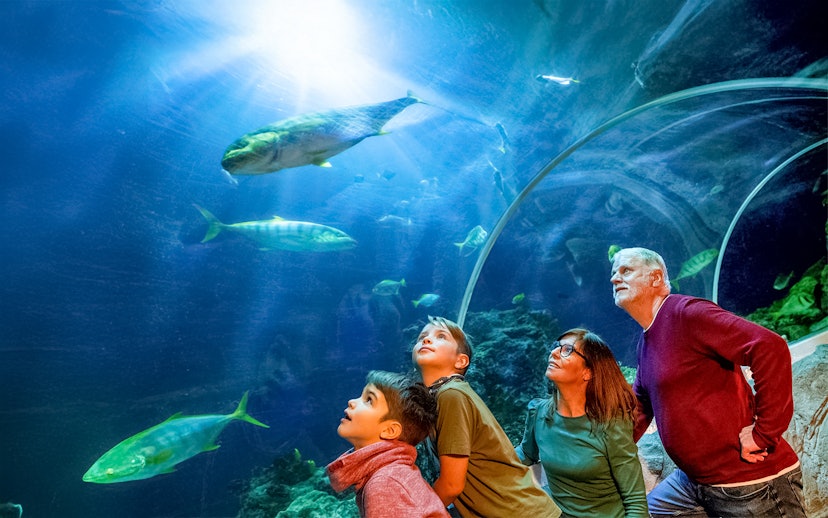
Plan your visit to SEA LIFE Speyer
SEA LIFE Speyer is an indoor aquarium best known for its Rhine-to-ocean route, tropical tunnel tank, and family-friendly close-up encounters with sharks, rays, and turtles. It’s compact enough for a short visit, but it can feel cramped when school breaks and weekend crowds hit the narrow one-way path. The biggest difference between a rushed visit and a good one is timing your route around the busiest tunnel and feeding windows. This guide covers arrival, tickets, pacing, and what to prioritize once you’re inside.
Quick overview: SEA LIFE Speyer at a glance
This is an easy half-day stop, but it works best if you treat it as a timed, one-way experience rather than a large all-day aquarium.
- When to visit: Monday–Friday outside school breaks is noticeably calmer than weekend late mornings, and the one-way route feels much easier when you’re not queuing behind strollers and feeding-show crowds.
- Getting in: From €19 for standard entry. PLUS tickets from €21. Booking ahead matters most for weekends, rainy days, and school holidays, when the most convenient entry slots can disappear first.
- How long to allow: 1–1.5 hours for most visitors. Feeding talks, the touch pool, and extra tunnel time push it closer to 2 hours.
- What most people miss: The seahorse and jellyfish area, the outdoor turtle zone in good weather, and the local Rhine exhibits at the start are all easy to rush past.
- Is a guide worth it? For most visitors, no. The route is simple and staff talks add enough context, though a behind-the-scenes tour makes more sense if you care about animal care systems and conservation work.
🎟️ Weekend and school-holiday slots for SEA LIFE Speyer can book out 1–3 days ahead. Lock in your visit before the time you want is gone.
See ticket options
Jump to what you need
🕒 Where and when to go
🎟️ Which ticket is right for you?
🗺️ Getting around
🐠 Which animals to prioritize
♿ Facilities and accessibility
Where and when to go
How do you get to SEA LIFE Speyer?
SEA LIFE Speyer sits at Speyer’s harbor basin beside the Technik Museum, about a 15-minute walk from the cathedral and around 2km from Speyer Hauptbahnhof.
Im Hafenbecken 5, 67346 Speyer, Germany
- Train: Speyer Hauptbahnhof → 25-minute walk → easiest if you want to pass through the old town on the way.
- Bus: Technik Museum stop → 5-minute walk → local buses from Speyer Hbf stop closest to the aquarium area.
- Car: Shared Technik Museum parking → 5-minute walk → expect around €5 for the day in the main lot.
- Taxi/rideshare: Main entrance drop-off → 1–2-minute walk → best if you’re arriving with young children or in bad weather.
Getting here from nearby cities
SEA LIFE Speyer works well as a short day trip from Heidelberg, Mannheim, and Karlsruhe, especially if you pair it with Speyer Cathedral or the Technik Museum.
From Heidelberg
- Distance: 50km
- Travel time: About 45 minutes by car or 60–75 minutes by train via Mannheim
- Time to budget: Best as a half-day trip unless you’re combining it with another Speyer stop
From Mannheim
- Distance: 30km
- Travel time: About 30 minutes by car or direct regional train
- Time to budget: Easy same-day outing with enough time for the aquarium and old town
From Karlsruhe
- Distance: 55km
- Travel time: About 45–60 minutes by car or regional train
- Time to budget: Leaves enough time for a relaxed aquarium visit and lunch in Speyer
Which entrance should you use?
SEA LIFE Speyer has one main entrance, but the wait depends on whether you’ve already booked a timed slot. What visitors get wrong most often is turning up at busy times without a reservation and expecting immediate entry.
- Pre-booked tickets: For visitors with timed online tickets. Expect a short check-in wait, usually around 5–10 minutes except at school-holiday peaks.
- On-the-day tickets: For walk-up visitors buying at the entrance. Expect longer waits around weekend late mornings and rainy afternoons.
When is SEA LIFE Speyer open?
- Daily: Opening hours vary by date and season, with timed-entry slots released in advance online.
- School holidays and event periods: More entry slots are usually added, but the busiest windows fill fastest.
- Last entry: 1 hour before closing.
When is it busiest: Weekend late mornings, rainy afternoons, and school-holiday dates are the hardest times to move comfortably through the tunnel and touch-pool areas.
When should you actually go?: A weekday slot close to opening gives you clearer views in the tunnel, less waiting at the touch pool, and more space in the smaller Amazon and seahorse zones.
Which SEA LIFE Speyer ticket is best for you
| Ticket type | What's included | Best for | Price range |
|---|---|---|---|
Standard Entry Ticket | Timed entry + all exhibits + daily talks and feeding presentations | A straightforward visit where you know your date and want the lowest entry price | From €19 |
PLUS Ticket | Timed entry + free cancellation up to the day before + one date change + digital guide + 10% gift shop discount | Plans that may shift at the last minute, especially if you’re traveling with children or uncertain weather | From €21 |
Behind-the-Scenes Tour | Entry + 90-minute guided backstage tour on selected dates | A visit where seeing filtration systems, food prep, and animal-care spaces matters as much as the tanks themselves | From €36 |
SEA LIFE Speyer Annual Pass | Unlimited entry for 12 months + shop and café discounts | Repeat visits where a single long day sounds unnecessary and you’d rather return in quieter seasons | From €35 |
Merlin Annual Pass Germany | Entry to SEA LIFE Speyer + other Merlin attractions in Germany | A wider Germany itinerary where you’ll use the pass more than once beyond Speyer | From €55 |
How do you get around SEA LIFE Speyer?
How do you get around SEA LIFE Speyer?
SEA LIFE Speyer is compact and linear, with a fixed one-way route from local freshwater habitats to tropical ocean tanks. In practice, that makes it easy to navigate on your own, but it also means you can’t casually double back once the tunnel area gets busy.
- Rhine source to North Sea: Local river fish, sturgeon, and Rhine-themed habitats → budget 10–15 minutes.
- Ocean zone: Main shark and ray tank with the underwater tunnel → budget 15–20 minutes if you want to linger.
- Coral, jellyfish, and seahorses: Smaller but slower-paced displays with the best close-up detail → budget 10–15 minutes.
- Amazon Rainforest: Warm, humid tropical section with piranhas and interactive floor effects → budget 10 minutes.
- Touch pool and exit zone: Supervised hands-on stop, gift shop, and outdoor area in good weather → budget 10–15 minutes.
Suggested route: Don’t sprint to the tunnel first and then rush the rest. Follow the route normally, slow down in the coral and seahorse sections before the main crowd builds, then give the tunnel extra time once you reach it.
Maps and navigation tools
- Map: The route is more one-way walkthrough than maze, so the entrance overview is usually enough before you start.
- Signage: Wayfinding is simple, but crowd flow around the tunnel and touch pool can make smaller exhibits easy to miss if you keep following the group.
- Audio guide/app: A digital guide is bundled with the PLUS ticket and adds more value if you want extra context without joining a tour.
💡 Pro tip: Save your longest stop for the tunnel, but don’t let the crowd pull you straight there mentally. The seahorses, jellyfish, and coral tanks are often at their quietest just before the tunnel bottleneck starts.
Which animals and habitats should you prioritise?

Ocean tunnel and shark tank
Ride type / habitat: Tropical ocean tank
This is the section almost everyone comes for, and it earns the hype. The 8-meter tunnel drops you under sharks, rays, and the rescued green sea turtle, which makes even a compact aquarium feel immersive. What most people miss is the panoramic viewing window just beyond the tunnel but it’s often a better place to pause than the tunnel itself when crowds are heavy.
Where to find it: In the main ocean zone, roughly mid-to-late in the one-way route after the freshwater and coral sections.
Amazon Rainforest
Species / habitat: South American freshwater ecosystem
The Amazon zone changes the pace of the visit completely, with warmer air, darker lighting, and species like piranhas and red-tailed catfish. It’s worth slowing down here because most visitors treat it as a pass-through on the way to the bigger tank. The interactive floor usually grabs children first, but the fish displays themselves deserve more time than they get.
Where to find it: After the central marine exhibits, in a smaller enclosed room toward the later part of the route.
Coral reef panorama
Species / habitat: Tropical coral reef
This wraparound reef tank is one of the most visually rewarding parts of the aquarium, especially if you want color and movement rather than big-animal drama. Clownfish, tangs, and other reef species make it feel packed with life, but many people only give it a glance before pushing on. The detail that gets missed most is how much is happening low in the rockwork, not just at eye level.
Where to find it: Before the ocean tunnel, in the brighter tropical marine section.
Seahorse nursery and jellyfish lab
Species / habitat: Seahorses and moon jellyfish
This is the easiest area to skip too quickly, which is a shame because it shows some of the aquarium’s most delicate animals. The seahorses reward patient looking, and the jellyfish tank is one of the most photogenic spots in the building. Most visitors rush through because the space is smaller and darker, but that’s exactly why it feels calmer than the headline exhibits.
Where to find it: In the dimly lit smaller galleries near the tropical marine displays before the later interactive zones.
Rhine to North Sea exhibits
Species / habitat: Local river and freshwater habitats
The opening section grounds the entire visit in the region’s own aquatic life, with trout, carp, and sturgeon tracing the Rhine’s journey. It matters because it gives the aquarium a sense of place instead of starting with generic tropical tanks. Most people move through it too fast because they’re eager for sharks, but it’s where the visit’s story is set up best.
Where to find it: Right at the start of the one-way route after entry.
Interactive rockpool
Species / habitat: Hands-on rockpool species
The touch pool is short, supervised, and often one of the most memorable moments for younger children. It’s less about rare species than about turning the visit from something you only look at into something you physically experience. What gets missed is timing because if a session has just ended, families move on without checking when the next supervised touch window starts.
Where to find it: Around the middle of the route, near the family-interaction zone before the final exhibits.
Facilities and accessibility
- 🎒 Storage: Travel light, because the route is compact and crowded days are much easier with a small day bag than bulky gear.
- 🚻 Restrooms: Restrooms are available on-site, and visitors regularly note that the facilities are well kept.
- 🍽️ Café and picnic area: There’s an on-site café for a quick snack, plus a picnic area where families can pause without leaving the attraction zone entirely.
- 🛍️ Gift shop: The gift shop sits near the exit, which makes it easy to save for the end instead of carrying souvenirs around the aquarium.
- 🪑 Seating: Seating inside is limited, so plan to take your main rest at the café, picnic area, or outdoor turtle zone in good weather.
- 🅿️ Parking: The large shared parking lot by the Technik Museum is the easiest option, and it’s only a short walk from the entrance.
- 🌦️ Weather comfort: The aquarium is fully indoors and climate-controlled, which makes it a reliable bad-weather stop year-round.
- ♿ Mobility: The aquarium is indoors and follows a single route, but narrow pinch points around the tunnel, touch pool, and peak-time queues make busy visits harder for wheelchair users than quiet weekday slots.
- 👁️ Visual impairments: This is a highly visual attraction, and many of the smaller details sit behind reflective glass, so staff talks are one of the best ways to add context without depending entirely on panels.
- 🧠 Cognitive and sensory needs: Weekday mornings outside school breaks are the easiest low-stimulation window, while the tunnel, feeding talks, and touch-pool area are usually the loudest and most crowded points.
- 👨👩👧 Families and strollers: Strollers can be restricted on very busy days because the route is tight, so a baby carrier is the safer choice if you’re visiting on a weekend or during school holidays.
SEA LIFE Speyer works best for toddlers through pre-teens because the route is short, visual, and interactive without needing a long attention span.
- 🕐 Time: Around 1–1.5 hours is realistic with children, and the tunnel, touch pool, and Amazon zone are the parts most worth prioritizing if attention starts to fade.
- 🏠 Facilities: The café, picnic space, restrooms, and small outdoor play area make it easier to break up the visit without turning it into a full-day commitment.
- 💡 Engagement: Ask children to spot the green sea turtle, count sharks in the tunnel, and find the seahorses — it slows the pace in a way that usually makes the visit better.
- 🎒 Logistics: Bring a baby carrier instead of relying on a stroller during peak periods, and aim for the first weekday slot if you want the easiest family visit.
- 📍 After your visit: The Technik Museum Speyer next door is the simplest add-on if your children still have energy and want something bigger to climb through and explore.
Rules and restrictions
What you need to know before you go
- Entry requirement: Timed-entry tickets are the norm, and booking ahead gives you the best chance of getting the slot you actually want on busy dates.
- Bag policy: Small bags are the easiest choice, while bulky items and stroller-sized loads become a bigger issue when the route is crowded and space tightens.
- Re-entry policy: Re-entry is not part of the normal visit flow, so treat the aquarium as a one-way experience and save your main break for the café or picnic area near the end.
Not allowed
- 🚼 Large strollers on peak days: They can be restricted when crowd levels make it hard to keep the one-way route and emergency paths clear.
- 🖐️ Touching animals outside supervised areas: Hands-on contact is limited to the staffed rockpool, which protects the animals and keeps the rest of the route moving.
- 🚧 Blocking the walkway: Stopping for long stretches in narrow sections, especially around the tunnel, makes the entire visit harder for everyone behind you.
Photography
Personal photography is part of the appeal here, especially in the tunnel, coral tanks, and jellyfish displays. The real limitation is less about access than about conditions: dark rooms, reflective glass, and crowded walkways make flash less useful than patience. If you want your best photos, go early on a weekday, avoid blocking the tunnel, and save long photo stops for the wider panoramic viewing windows rather than the narrowest bottlenecks.
Good to know
- Feeding-show timing: The area around the ocean tank gets much more congested just before the shark feed, so decide early whether you want the show or a quieter route.
- Visit length: Adults can move through in under an hour, but that usually leaves the smaller local and seahorse exhibits feeling like an afterthought.
Practical tips
- Booking and arrival: Book 1–3 days ahead for weekends, school holidays, and rainy days, and arrive 10–15 minutes before your slot so you’re not starting the one-way route already behind the biggest crowd pulse.
- Pacing: Don’t race to the tunnel and assume the rest is filler. The coral reef, jellyfish, and seahorse displays are where the visit feels calmest and most detailed.
- Crowd management: The best slot is usually the first weekday entry outside school breaks, because the narrow tunnel and touch-pool area stay manageable for longer.
- Feeding talks: If the 3pm shark feed matters to you, reach the ocean zone 5–10 minutes early; if it doesn’t, avoid that area altogether around then because the crowd builds fast.
- What to bring or leave behind: A baby carrier works better than a stroller on busy dates, and a small bag is much easier to manage than anything bulky in the tighter sections.
- Food and drink: If you only want a quick pause, use the on-site café or picnic area near the end; if you want a proper meal, wait until after your visit and head into Speyer’s old town.
- Photo strategy: The best tunnel photos usually come from waiting a minute for space rather than shooting immediately when you enter, and the panoramic window often gives you cleaner shots than the narrow tunnel curve.
- With children: Give them a simple mission like finding the sea turtle, touching a starfish, and spotting the seahorses. This makes the visit feel longer because it turns the experience into a game.
What else is worth visiting nearby?
Commonly paired
Technik Museum Speyer
Distance: About 700m — 10-minute walk
Why people combine them: It’s the easiest same-day pairing by far, because it sits next door and turns a short aquarium stop into a fuller family day with planes, trains, and large-scale hands-on exhibits.
Commonly paired
Speyer Cathedral
Distance: About 1.2km — 15-minute walk
Why people combine them: The cathedral gives you the exact opposite atmosphere after the aquarium — bigger scale, fresh air, and one of Speyer’s most important historic landmarks, all within walking distance.
Also nearby
Historical Museum of the Palatinate
Distance: About 1.4km — 18-minute walk
Worth knowing: This is a smart add-on if you want something educational after SEA LIFE without committing to another huge site.
Rhine river boat cruise
Distance: About 1.5km — 5-minute drive or 20-minute walk to the pier area
Worth knowing: A short cruise is a relaxed way to round out the day, especially if you want to see Speyer from the water after spending the morning under it.
Eat, shop and stay near SEA LIFE Speyer
- On-site: The SEA LIFE café is best for a short snack stop rather than a destination meal, but it’s useful if you’re visiting with young children and don’t want to stretch the outing too long.
- Picnic area: The on-site picnic space is the better value option if you’ve brought your own snacks and want a break without leaving the aquarium area.
- Domhof: A good post-visit stop in Speyer’s center if you want a proper sit-down meal after the aquarium rather than a quick convenience bite.
- 💡 Pro tip: Don’t stop for food too early in the visit. The route is short enough that it makes more sense to finish first, then eat in the old town if you want something more substantial.
- SEA LIFE gift shop: Aquarium-themed plush toys, small souvenirs, and children’s keepsakes right at the exit make this the easiest shopping stop if you’re visiting with kids.
- Speyer old town shops: Better if you want local rather than aquarium-branded souvenirs, and they’re easy to browse on the walk back toward the cathedral area.
Staying in Speyer makes sense if you want a slower family-friendly base and plan to combine SEA LIFE with the cathedral, museum district, or a relaxed old-town evening. It’s less useful if the aquarium is your only stop, because most visitors finish the attraction in under 2 hours and move on. For a longer regional trip, Speyer is calm and walkable, but it’s not as broad a base as Heidelberg.
- Price point: Speyer usually feels more moderate than Heidelberg, with the best value in simple family hotels and regional stays.
- Best for: Short family breaks where you want minimal logistics and easy access to several walkable attractions in one town.
- Consider instead: Heidelberg for a more atmospheric city stay with more dining and hotel choice, or Mannheim if fast transport connections matter more than charm.
Frequently asked questions about visiting SEA LIFE Speyer
Most visits take 1–1.5 hours. If you stop for the touch pool, wait for a feeding talk, or let children use the outdoor play area in good weather, it can stretch closer to 2 hours. Adults moving quickly can finish in under an hour, but that usually means skipping over the smaller exhibits that add variety.
Yes, it’s smart to book in advance, especially for weekends, school holidays, and rainy days. SEA LIFE Speyer uses timed-entry tickets, and the most convenient slots can disappear before the day of your visit. Weekday off-peak visits are more forgiving, but pre-booking still saves time at the entrance.
A separate skip the line ticket is not really the issue here. Pre booking a timed slot is what matters. If you already have an online ticket, you’ll usually move past the ticket-buying wait and straight to entry check-in. That makes the biggest difference on weekend late mornings and during school breaks.
Arrive 10–15 minutes early. That gives you time to check in, deal with parking or bags, and start the one-way route without feeling rushed. On quiet weekdays, that buffer is generous, but on holidays and rainy afternoons it helps you avoid beginning your visit in the middle of a crowd surge.
Yes, a small backpack or day bag is the easiest option. The route is compact, and bulky items are much harder to manage once the aquarium gets crowded. If you’re visiting with young children, a baby carrier is often more practical than bringing lots of gear and hoping a stroller will be convenient inside.
Yes, most visitors take photos throughout the aquarium, especially in the tunnel, coral section, and jellyfish room. The bigger challenge is low light and reflective glass rather than access. You’ll usually get better results by turning off flash, waiting for a clear gap in the crowd, and using the wider viewing windows when possible.
Yes, SEA LIFE Speyer works well for school groups and small organized visits. The route is easy to follow and the feeding talks add structure, but the space is still fairly narrow, so large groups should book ahead and avoid peak public times when possible. Weekday mornings are usually the easiest fit.
Yes, it’s especially well suited to toddlers and younger children because the visit is visual, short, and interactive. The underwater tunnel, touch pool, Amazon zone, and outdoor play area give children different things to focus on without needing a long attention span. It’s less tiring than a zoo or full-day park.
It’s more accessible on quiet days than on crowded ones. The aquarium is indoors and follows a single route, but the tunnel area and several tighter sections can feel difficult when visitor numbers spike. If accessibility matters to your visit, choose a weekday morning outside school holidays rather than a busy weekend slot.
Yes, there’s an on-site café and picnic area for a short break, and Speyer’s old town has better options if you want a full meal afterward. Because the route is relatively short and re-entry is not part of the normal flow, most visitors find it easier to finish the aquarium first and then eat.
The quietest visits are usually the first weekday slots outside school holidays. Weekend late mornings and rainy afternoons are the most congested because families bunch into the same narrow route and spend longer at the main tank. If you want the tunnel at its calmest, go early rather than aiming for the afternoon feeding.
Yes, parking is available in the large shared lot used by the aquarium and Technik Museum. It’s about a 5-minute walk from the entrance and usually the simplest option if you’re arriving by car. Expect paid parking for the day rather than a free attraction-specific lot.